Gold jewelry has been cherished for centuries, standing as a symbol of wealth, beauty, and cultural significance across the globe. From ancient times to the modern era, gold’s allure has captivated humans, making it a sought-after possession in many societies. This article will delve into why gold jewelry is so valuable and the various aspects that contribute to its enduring appeal.
We will explore factors such as economic influences, purity, craftsmanship, and cultural importance. By understanding these elements, we gain insight into gold jewelry’s profound impact on human history and society.
What Factors Contribute to the Value of Gold Jewelry?
Gold jewelry’s value is shaped by a combination of economic and intrinsic factors that have stood the test of time. One significant aspect is the rarity of gold itself. As one of the rarest metals on earth, gold’s scarcity naturally increases its worth, making it a precious commodity. Furthermore, the craftsmanship involved in creating gold jewelry adds another layer of value. Master craftsmen use their skills to intricately design pieces that not only showcase their talent but also enhance the gold’s desirability.
Another economic factor is the fluctuation of global market trends, which significantly affects gold prices. The demand for gold can rise due to economic instability, leading investors to view it as a safe haven asset. During times of currency devaluation or inflation, gold maintains its value, providing a hedge against economic decline. This investment aspect adds significant value to gold jewelry, as it becomes both a decorative item and an asset of financial security. Factors such as global economic policies and geopolitical tensions also play a role in influencing gold’s market value.
How Does the Purity of Gold Affect Its Value in Jewelry?
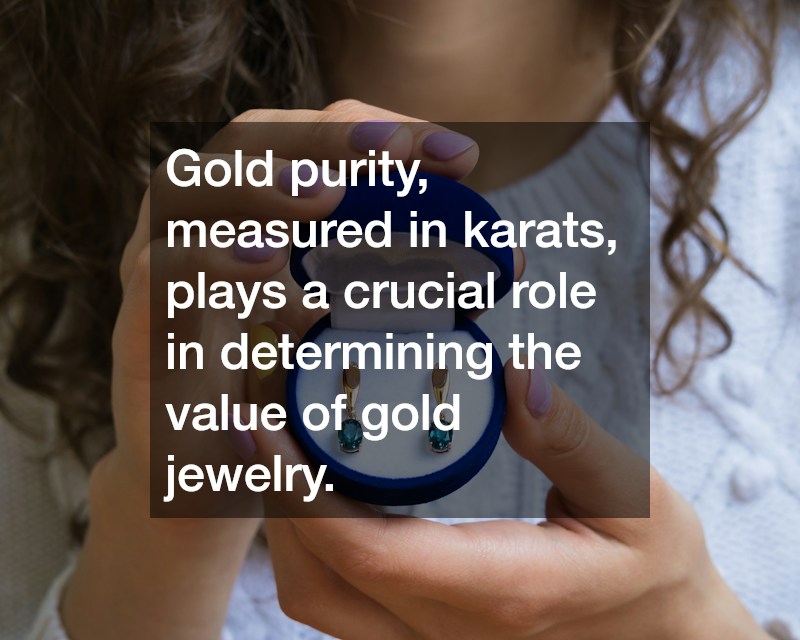
Gold purity, measured in karats, plays a crucial role in determining the value of gold jewelry. Higher karat values indicate a higher percentage of gold content in the jewelry, enhancing its overall worth. For instance, 24-karat gold is considered pure gold, while 18-karat gold is composed of 75% gold mixed with other metals for added strength. As the karat level decreases, so too does the intrinsic value, but the durability might increase due to the alloying process. A critical consideration for buyers is balancing purity with strength, especially in pieces meant for regular wear.
Jewelry buyers often seek out high-purity gold for its vivid color and greater investment value. The rich, warm hue of high-karat gold appeals to many, distinguishing pieces as luxury items and amplifying their appeal. This vibrant coloration, along with the prestige of owning high-karat gold, can lead to a higher market demand for such jewelry. Additionally, high-purity gold tends to appreciate over time due to its scarcity and investor interest, heightening its value as an asset. Buyers are encouraged to consider both the aesthetic and monetary aspects when selecting gold jewelry based on purity.
Conversely, lower-karat gold jewelry is often favored for its practicality and affordability. Metals like copper and silver are combined with gold to create various hues and increases the durability of the jewelry. This blend allows jewelers to produce intricate designs that may not be feasible with pure gold’s softness. Consequently, lower-karat gold jewelry offers an accessible entry point for those seeking beautiful, yet robust, pieces without compromising too much on appearance. This versatility in gold purity levels enables consumers to select jewelry that meets their specific needs, preferences, and budget constraints.
What Cultural Significance Does Gold Jewelry Hold?
Gold jewelry holds significant cultural and historical importance, symbolizing status, wealth, and spiritual beliefs across different societies. In many cultures, gold has been used in ceremonial practices, signifying prosperity and divine favor. For example, in Indian culture, gold is integral to weddings and religious events, embodying purity, wealth, and auspicious beginnings. Similarly, gold was revered in ancient Egypt, where it was associated with the gods and the afterlife. Throughout history, gold has carried meaning beyond its physical value, embedded deeply within cultural identities and traditions.
Gold jewelry often represents milestones and rites of passage, marking significant life events and accomplishments. In many traditions, giving gold jewelry signifies respect, love, and commitment, augmenting its emotional value. Whether as a token of marriage, a celebration of achievements, or a valued heirloom, gold jewelry serves as an enduring legacy that crosses generations. This symbolic aspect elevates gold’s worth beyond mere market calculations, cementing its role as a treasured personal and cultural artifact. The continuity of these customs reinforces gold jewelry’s stature as an emblem of timelessness and tradition.
Gold jewelry remains valuable due to a confluence of economic, intrinsic, and cultural factors. Its rarity and longevity as a precious metal, alongside its decorative and investment potential, contribute to its enduring allure. The interplay between gold’s market value and craftsmanship enriches its status as both a functional asset and an aesthetic marvel. Additionally, the cultural significance attached to gold jewelry amplifies its worth, embodying traditions and societal markers that span centuries. Gold jewelry’s multifaceted appeal thus ensures its continued reverence and admiration in the global landscape.